We use cookies to understand how you use our site and improve your experience. Privacy Policy

All Build Guides
BudgetUpdated 2026-08-064 min read

Ultra Budget PC Under $600

The absolute cheapest new gaming-capable PC you can build — perfect for a first build, a kid's gaming PC, or basic 1080p gaming on a tight budget.

Marcus JohnsonPublished 2025-07-146 components$600 budgetCompatibility checked

Build this PC in one click

Load all 6 parts into the System Builder to check compatibility and total the build against your $600 target.

Key Takeaways

  • This list comes to $576.74 for six parts and it is a complete computer, not a parts list with a hole in it. That distinction is the whole point: the previous version of this build paired a 5600X with no integrated graphics, came to about $502, and could not produce a picture at all without a further purchase that pushed the real total past $650.
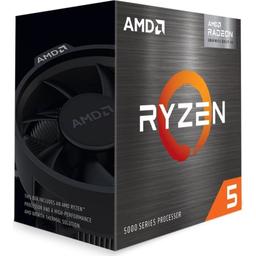
  • One part does the work. The $173.82 Ryzen 5 5600GT is the CPU, the graphics card and the cooler in a single line item — six Zen 3 cores, Radeon Vega 7 graphics and a bundled Wraith Stealth. At August 2026 prices it is $6 cheaper than the 5600X it replaces and it deletes the $81 cooler line and the graphics-card problem at the same time.
  • Expect esports, Minecraft and older titles at 1080p, and nothing beyond that. Vega 7 puts Counter-Strike 2 at about 62 fps on Low and Rocket League at 112, but Fortnite is 48 on Low DX11 — that is the shape of the ceiling. Modern AAA needs a discrete card, full stop.
  • AM4 and DDR4 are the reason this fits, and the gap widened in 2026 rather than closing: a 16GB DDR4-3200 kit is about $57 against roughly four times that for the cheapest 16GB DDR5. You are buying more usable hardware today in exchange for a dead-end socket where the 5700X3D is roughly the last stop.
  • The board and the power supply are the parts sized for a machine you have not finished building. B550 keeps PCIe 4.0 to both the x16 slot and the M.2 socket and the 550W unit covers a mid-range card, so adding an Arc B580 or an RX 9060 XT later takes this to a genuine 1080p gaming PC for around $780–$840 with nothing replaced.
  • If you already know you want to play modern games, buy a different list. That $780–$840 endpoint is where our $800 budget gaming build starts, and building this one first means building it twice.

A new desktop for under $600 is still possible in August 2026, but the shape of the build has changed. Memory and SSD prices have climbed far enough this year that the old "$500 tower now, graphics card later" list no longer fits inside $500. What does fit is an APU build: this list comes to $576.74 for six parts and it puts a picture on screen the day it boots.

The $500 build — complete parts list

ComponentPickApprox. price (Aug 2026)
CPUAMD Ryzen 5 5600GT (Radeon Vega 7, cooler included)$173.82
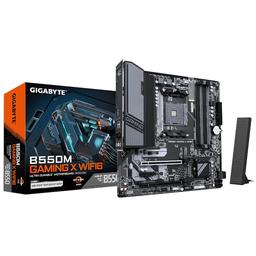
MotherboardGigabyte B550M GAMING X WIFI6$147.99
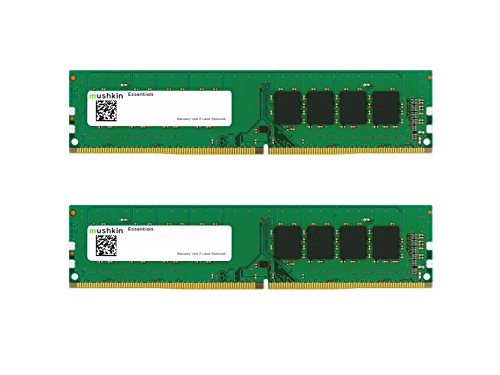
MemoryMushkin Enhanced Essentials 16GB (2×8GB) DDR4-3200$54.95
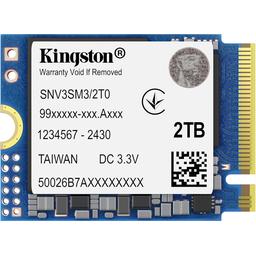
StorageKingston NV3 500GB NVMe$105.00
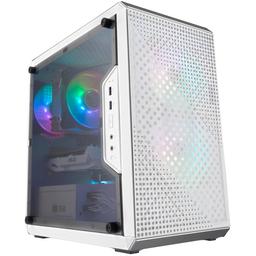
CaseCooler Master MasterBox Q300L$39.99
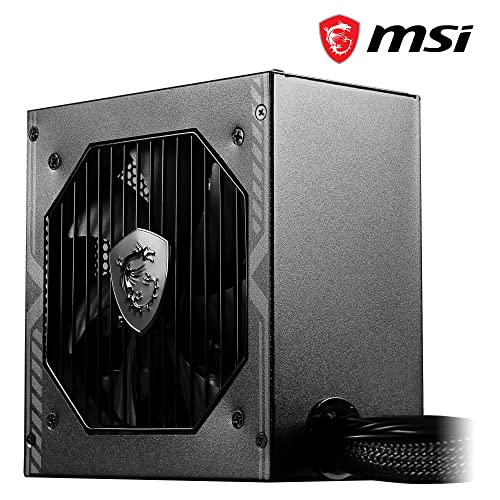
Power supplyMSI MAG A550BN 550W$54.99
Total6 parts$576.74

These are approximate August 2026 figures drawn from the offers in our own catalogue, not live quotes. Treat the total as a planning number and expect each line to move with sales and stock — component pricing is checked periodically here, not continuously, so confirm the number at the retailer before you order.

What changed since the last version of this build

The previous list paired a Ryzen 5 5600X with a 1TB drive, a tower cooler, a mesh mid-tower and a 750W modular supply, and came to about $502 — with no graphics card and no integrated graphics, so it could not produce a picture at all without a further purchase. Two things broke that list in 2026:

  • Memory and NAND repriced upward. A 16GB DDR4-3200 kit is around $57 now rather than the $35 it was, and a 1TB NVMe drive runs $150 and up where a 500GB drive is $105. Storage alone is most of the gap.
  • The no-display problem got expensive to solve. Adding even a cheap graphics card pushed the real total past $650.

Swapping the 5600X for the Ryzen 5 5600GT fixes both at once. It is the same six Zen 3 cores on the same AM4 socket, plus Radeon Vega 7 graphics and a bundled Wraith Stealth cooler — so the CPU line goes up about $46 while the cooler line ($38) disappears entirely and the machine actually displays an image. Trimming the drive to 500GB and the case and supply to their honest sizes for a build with no discrete GPU does the rest.

Why AM4 and DDR4 in 2026

Because it is still the cheapest way to buy real hardware, and the gap widened this year rather than closing. A 16GB DDR4-3200 kit is about $57; the cheapest 16GB DDR5 kit in our catalogue is roughly four times that. B550 still gives you PCIe 4.0 to both the graphics slot and the M.2 drive. You give up the upgrade runway AM5 has — AM4 is a dead-end socket now, and the 5700X3D is roughly the last stop on it — but for a first machine or a kid's gaming PC, spending the socket premium on hardware you can use today is the better trade.

Where every dollar goes

There is no filler in this list. The 5600GT is the single largest line at $173.82 and it earns it: it is the CPU, the graphics card and the cooler in one part. The Gigabyte B550M GAMING X WIFI6 at $147.99 keeps PCIe 4.0 on both the x16 slot and the M.2 socket, which is what protects the graphics-card upgrade you have not bought yet. The MasterBox Q300L is the one place a $40 case is the right answer — with no discrete GPU there is no 300W heat source to feed. The only real cut is the 500GB drive: at current NAND prices, 1TB costs $48 more, and it is the easiest thing to add later because the board has a second M.2 slot.

Adding a graphics card later

The 550W supply and the PCIe 4.0 x16 slot are sized for exactly this. A modern sub-$300 card — the 12GB Intel Arc B580 at roughly $290, or an RX 9060 XT 16GB at about $350 — drops straight in and turns this into a genuine 1080p gaming PC for a total in the $780–$840 range. A used RX 6600 at around $150 is the cheapest path of all, and the benchmark rows below show what it adds over the integrated graphics. That is the same place our budget gaming build under $1,000 lands, so if you know from the start that you want to play modern games, buy that list instead of building this one twice.

What this build is for

This is a first build, a kid's gaming PC, a homework-and-Roblox machine, or the box you put in a spare room. It plays esports titles, Minecraft and older games at 1080p on the integrated Vega 7 graphics, and it is a complete computer at $576.74 rather than a parts list with a hole in it. If gaming is not the point at all and you want a clean desktop for work, the home office build spends the difference on the things that matter for productivity instead.
Our Verdict

At $576.74 this is a complete, working AM4 desktop — six parts, a picture on screen, and nothing you have to buy twice. The Ryzen 5 5600GT is what makes it fit: six Zen 3 cores, Radeon Vega 7 graphics and a bundled cooler in one part, which is the only configuration that still lands under $600 now that memory and NAND have repriced upward. Expect esports titles, Minecraft and older games at 1080p, not modern AAA. The PCIe 4.0 B550 board and the 550W supply are sized for a graphics card you add later — an Arc B580 or RX 9060 XT takes this to a real 1080p gaming PC for around $800, which is also where our $800 build starts, so buy that list instead if gaming is the goal from day one. The honest limits are the dead-end AM4 socket, 16GB of memory and a 500GB drive.

Benchmark Performance

Every row names its own configuration. "5600GT iGPU" rows are this list exactly as written — a Ryzen 5 5600GT on Radeon Vega 7 with the 16GB DDR4-3200 dual-channel kit, which the integrated GPU depends on heavily. "+ RX 6600" rows show the same build with a ~$150 used graphics card added, for a total around $727. Figures are conservative 1080p averages; treat them as the floor you should expect, not a best case.

Average frames per second across benchmarked titles. Every row names its own configuration. "5600GT iGPU" rows are this list exactly as written — a Ryzen 5 5600GT on Radeon Vega 7 with the 16GB DDR4-3200 dual-channel kit, which the integrated GPU depends on heavily. "+ RX 6600" rows show the same build with a ~$150 used graphics card added, for a total around $727. Figures are conservative 1080p averages; treat them as the floor you should expect, not a best case.
GameSettingsAverage FPS1% low FPS
Counter-Strike 21080p Low (5600GT iGPU)6241
Minecraft (vanilla)1080p 12 chunks (5600GT iGPU)9864
Rocket League1080p Performance (5600GT iGPU)11278
Grand Theft Auto V1080p Normal (5600GT iGPU)5742
Fortnite1080p Low DX11 (5600GT iGPU)4834
Counter-Strike 21080p High (+ RX 6600)215128
Fortnite1080p High DX11 (+ RX 6600)10879
Cyberpunk 20771080p Medium (+ RX 6600)6852
Elden Ring1080p High (+ RX 6600)5747

Average FPS shown; hover a bar for 1% lows. Figures are editorial estimates unless the note above cites a source, and vary by settings, drivers, and specific SKUs.

6

Components

$600

Budget Tier

Pass

Compatibility

  • Three parts in one line item: six Zen 3 cores, Radeon Vega 7 integrated graphics and a bundled Wraith Stealth cooler. That bundling is the whole reason this list still fits under $500 — a 5600X plus a tower cooler costs less on the CPU line and more overall, and produces no picture at all.

    • 6-core / 12-thread
    • Radeon Vega 7 iGPU
    • Cooler included

    Alternative

    AMD Ryzen 7 5700G — About $9 more for eight cores and the same Vega graphics. Worth it if you multitask hard; it does nothing for games, which are GPU-bound on an APU long before the cores run out.

  • The cheapest board in our catalogue that still carries PCIe 4.0 to both the graphics slot and the M.2 drive, with Wi-Fi 6 included. An A520 board saves about $12 and quietly halves the bandwidth to the card you plan to add later.

    • AM4 / B550
    • PCIe 4.0 x16 + M.2
    • Wi-Fi 6 onboard
  • DDR4-3200 is the sweet spot for Zen 3, and buying it as 2x8GB rather than one stick matters more here than capacity does — dual channel is worth double-digit percentages on an APU because the integrated GPU has no memory of its own.

    • 16GB (2×8)
    • DDR4-3200
    • Dual channel

    Alternative

    Corsair Vengeance LPX 32GB (2x16GB) DDR4-3200 — About $142 more for double the memory at current DDR4 prices. Defer it — both DIMM slots are free on day one and the price should ease.

  • The concession current NAND pricing forces. 500GB holds Windows and a handful of games; 1TB is roughly $48 more today, which is the difference between fitting under $500 and not. The board's second M.2 slot makes this the easiest line to upgrade later.

    • 500GB NVMe
    • PCIe 4.0
    • DRAM-less

    Alternative

    Kingston NV3 1TB — Roughly $48 more for double the capacity. Buy it at build time if the budget stretches — it is the first thing you will run out of.

  • With no discrete GPU there is no 300W heat source to feed, so this is the one build where a $40 case is the correct answer rather than a corner cut. Ventilated panels, a micro-ATX footprint, and clearance for a full-length card when you add one.

    • Micro-ATX
    • Ventilated panels
    • Full-length GPU clearance
  • This build draws well under 150W, so 550W is already generous — and it is enough to cover the Arc B580 or RX 9060 XT you are most likely to add, which means no second power-supply purchase.

    • 550W
    • 80+ Bronze
    • Covers a future mid-range GPU

Parts List

As an Amazon Associate, PlanMyPC earns from qualifying purchases made through links on this page. Read our affiliate disclosure

Where to Spend, Where to Save

Spend more on

The APU itself — it is three purchases in one
At $173.82 the Ryzen 5 5600GT is 30% of the build total and the only line where paying more is unambiguously right, because it is not really the CPU line. It is the CPU, the graphics card and the cooler at once, and that bundling is the single reason this list still lands under $600 in August 2026. A cheaper non-G chip saves money on paper and then costs $150 or more to get an image on screen.
Two memory sticks, which is not the same as more memory
The integrated Vega 7 graphics have no memory of their own — they borrow bandwidth from the system kit, so the number of modules changes frame rates in a way it never does on a build with a graphics card. Buying the $54.95 16GB kit as 2×8GB rather than a single 16GB stick is worth double-digit percentages on this build and costs nothing extra. Never fill an APU machine with one stick, whatever the capacity.
The B550 board over a cheaper A520
The $147.99 Gigabyte B550M is among the cheapest boards in our catalogue that still carry PCIe 4.0 to both the x16 slot and the M.2 socket, with Wi-Fi 6 included. An A520 board saves a little and quietly halves the bandwidth to the graphics card this entire build is designed to accept later. That is a small saving against the one upgrade that defines the machine's second life — the worst trade on the page.

Save on

Storage capacity — 500GB is the concession, and it is the right one
The $105 Kingston NV3 500GB is the only genuine cut on this list, and it exists because 1TB costs about $55 more at August 2026 NAND prices, which is precisely the difference between fitting under $600 and not. 500GB holds Windows and a handful of games, and the board's second M.2 slot makes this the single easiest line to fix later. Buy the 1TB at build time only if the budget genuinely stretches.
The case
This is the rare build where a $39.99 case is the correct answer rather than a corner cut, because with no discrete GPU there is no 300W heat source to feed. The MasterBox Q300L has ventilated panels, a micro-ATX footprint and clearance for a full-length card when you add one, which is the entire requirement. Spending $80 more here buys glass and cable channels, not temperatures or frames.
Memory capacity, for now
16GB is enough today for a browser, a game and Discord, and doubling to 32GB costs about $142 more at current DDR4 prices — nearly a third of the whole build for headroom you are not using yet. Both DIMM slots are free on day one, so this is a deferred purchase rather than a foregone one, and DDR4 pricing has more room to ease than to climb.

Ready to build this list?

Every part above drops straight into the System Builder — compatibility checks, a running price total, and a one-click buy list.

The Bottom Line

Pros

  • Genuinely complete at $576.74 — six parts, a working display output and a cooler in the box, with nothing you have to buy twice
  • Built to accept a graphics card later: PCIe 4.0 on B550, a 550W supply and room for a full-length card
  • AM4 and DDR4 buy far more hardware per dollar than AM5 at this budget, and the gap widened in 2026 as DDR5 repriced upward
  • The 5600GT is CPU, GPU and cooler in one line item — the only configuration that still fits under $600

Cons

  • Radeon Vega 7 integrated graphics handle esports, Minecraft and older titles only — modern AAA needs a discrete card
  • AM4 is a dead-end socket: the 5700X3D is roughly the last upgrade, and after that any CPU jump means a new board and memory
  • 16GB of DDR4 is enough today but is the first thing to feel tight with a browser, a game and Discord open at once
  • 500GB of storage is the concession current NAND prices force — 1TB costs about $48 more

Frequently Asked Questions

Can you really build a gaming PC for under $600 in 2026?

Yes, but only as an APU build. This six-part list comes to about $580 with a Ryzen 5 5600GT, whose Radeon Vega 7 graphics handle Counter-Strike 2, Minecraft, Rocket League and Fortnite at 1080p low. Modern AAA needs a discrete card, which puts the real total nearer $730–$840.

Why a Ryzen 5 5600GT instead of the cheaper Ryzen 5 5600X?

Because the 5600X has no integrated graphics and no bundled cooler. Its lower price is wiped out by an $81 cooler plus a graphics card just to get a picture. The 5600GT is the same six Zen 3 cores with Vega 7 graphics and a Wraith Stealth cooler in the box — the only way this list stays under $600.

Is AM4 still worth buying in 2026?

For a budget build, yes, and more so than last year. About $203 buys a B550 board and a 16GB DDR4-3200 dual-channel kit; the cheapest 16GB DDR5 kit alone costs roughly twice that. The trade-off is real: AM4 is a closed socket, so the Ryzen 7 5700X3D is about the last upgrade available.

Which graphics card should I add to this build first?

A used Radeon RX 6600 at around $150 is the cheapest real upgrade and roughly triples 1080p performance over Vega 7. Buying new, the 12GB Intel Arc B580 is about $290 and the RX 9060 XT 16GB about $350. All three run on the 550W supply and use the board's PCIe 4.0 slot.

Is 16GB of RAM enough for this build?

Yes for gaming and everyday use, and it is the right call at this budget. Both DIMM slots stay free, so you can move to 32GB later — though at current DDR4 prices a 32GB kit is about $199, so defer it. Always run two sticks rather than one: dual channel matters a lot on an APU.

Should I just buy a cheap prebuilt or a used office PC instead?

A used business desktop is genuinely cheaper, but it usually has a proprietary board, a 180–300W supply and a case that will not take a full-length graphics card, so the upgrade path ends almost immediately. This build gives you a standard platform with PCIe 4.0 and 550W of headroom instead.

Related Guides

Parts6 components
Target$600