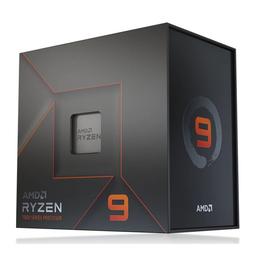
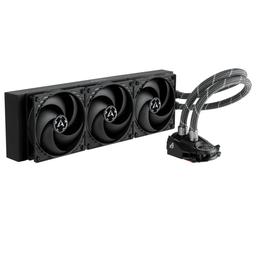
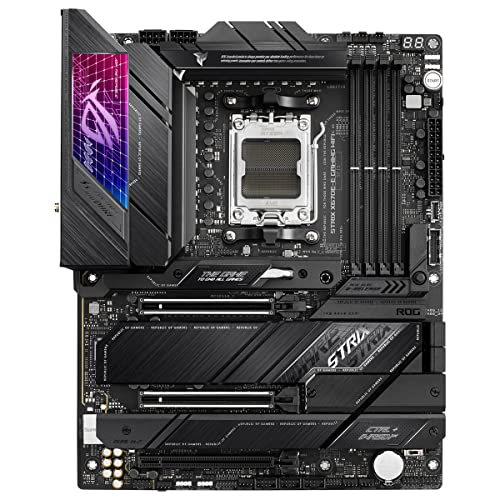
August 2026 price check This build was specced to a $3,500 target. At August 2026 catalogue prices the same parts list comes to about $5,541. The RTX 4090 is most of it — end-of-life, and our last catalogue reading is about $3,400. VRAM is the one thing this build cannot trade away, so if $3,500 is a hard ceiling the answer is a 16GB card and smaller models, not a cheaper 24GB card.
AI & Machine Learning Workstation (2026)
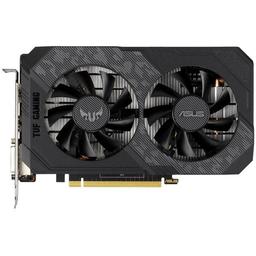
Every other spec on an AI workstation is a rounding error next to one number: how much VRAM sits on the graphics card. That single figure decides which models load at all, how long a context window you can hold, and whether a fine-tune finishes overnight or falls over. This build is organised around it — a 24GB RTX 4090 paired with a 16-core Ryzen 9 7950X, 32GB of DDR5-6000 and a 2TB Gen4 NVMe, for roughly $5,541 at August 2026 catalogue prices.
Why 24GB of VRAM Is the Spec That Matters
A quantized model has to fit in VRAM or it doesn't run at full speed — there is no gradual degradation, just a cliff. At 4-bit quantization, a 7B model needs roughly 5GB, a 13B around 9GB, and a 32B about 19GB. All three fit on the RTX 4090's 24GB with room left for the KV cache that grows with your context length. A 70B model at the same quantization wants roughly 40GB, so it spills to system memory and drops from tens of tokens per second to single digits. That is the ceiling you are buying, and it is worth understanding before you spend: see the measured figures in the benchmark section below.
For training and fine-tuning the same logic applies with less headroom. LoRA and QLoRA fine-tunes of 7B-class models fit comfortably in 24GB; full fine-tunes of anything meaningful do not, and are a cloud job rather than a desktop one. Compare the rest of the graphics card catalog if you want to see where the VRAM tiers fall.
The CPU Feeds the GPU
The Ryzen 9 7950X is here for 16 cores and 32 threads of preprocessing — image decode and augmentation, tokenization, pandas and Polars transforms, and the CPU-bound halves of training loops. A GPU this fast is easy to starve: if your dataloader can't keep the batch queue full, utilisation sags and the expensive part of the machine idles. The X670E platform also gives full PCIe 5.0 lanes and a second x16-capable slot, which matters if you ever add a second card.
Memory, Storage and Power
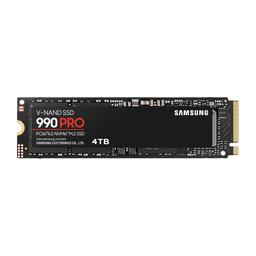
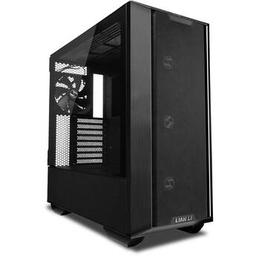
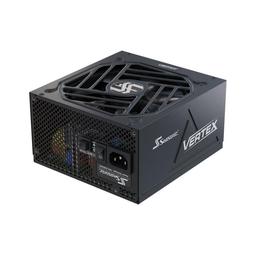
32GB of DDR5-6000 is the floor, not the target. It handles single-GPU training and local inference fine, but dataset caching, notebook sprawl and CPU-offloaded model layers all eat into it quickly — the board takes 128GB and two DIMM slots are free. The 2TB Gen4 NVMe is sized for checkpoints and active datasets, both of which grow faster than people expect. The 1000W ATX 3.0 supply provides a native 12VHPWR connector for the 450W card with genuine headroom, and the Lancool III's mesh panels are what keep that card at its boost clocks through a multi-hour run rather than thermally throttling in hour two.
Updated for Mid-2026
VRAM is still king, and the tier list has moved. The RTX 5090's 32GB is now the meaningful step up — it takes 32B-class models to longer contexts and opens up comfortable Flux and SDXL-scale image work that the 4090 handles but does not enjoy. The RTX 4090 remains a strong buy, particularly on the used market, and is the better value per dollar of VRAM. On CPU, the Zen 5 Ryzen 9 9950X edges the 7950X on preprocessing throughput for a modest premium, and PyTorch and CUDA support for NVIDIA's Blackwell architecture is now mature rather than experimental.
Where to Spend the Difference
As specced the parts total roughly $5,541 against a $3,500 budget, almost all of the gap being the end-of-life RTX 4090. The first upgrade is always VRAM — a 5090 before anything else. The second is memory, to 64GB. The third is a second NVMe for datasets so checkpoints aren't competing with the OS for the same drive. If you also do 3D or video work on the same machine, the 3D rendering and animation workstation and the content-creator workstation rebalance the same budget toward render and encode throughput instead. And if gaming is the primary use with AI second, the 4K gaming powerhouse spends the same money on shader throughput rather than VRAM capacity — a good gaming build is often a poor AI build, because a 16GB card that beats this one in some games will refuse models this one runs.
Ready to price it out? Configure this build on PlanMyPC to check compatibility and total the parts at our catalogue figures — approximate August 2026 numbers rather than live quotes, so confirm each line at the retailer before you order.