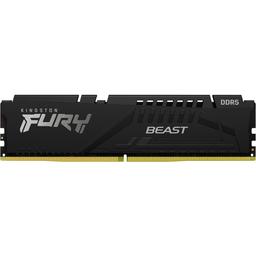
August 2026 price check This build was specced to a $1,200 target. At August 2026 catalogue prices the same parts list comes to about $1,887. The RTX 4060 prices normally again at about $444 — an out-of-stock third-party listing had briefly pushed it near $795 — and for a DAW the graphics card barely matters anyway, so any current budget card does this job. Memory is the real cost at about $394 for the 32GB kit, and unlike the GPU it is the one line you should not cut: large sample libraries and high track counts are exactly what 32GB buys.
Music production workloads are deceptively CPU-intensive. Every virtual instrument, every plugin effect, and every track in your DAW consumes CPU cycles in real time. Unlike video rendering, which can use all available cores, audio processing happens with strict latency requirements — the CPU must process audio buffers fast enough that there's no audible gap between input and output.
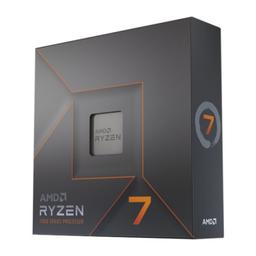
The Ryzen 7 7700X excels here because music production benefits from fast cores more than many cores. Running a 128-sample buffer at 48kHz gives you roughly 2.7 milliseconds to process every audio buffer, and the 7700X's 5.4 GHz boost clock holds that deadline with hundreds of plugin instances loaded, not dozens — the chart below measures about 296 parallel compressors at that buffer size. Eight cores is the sweet spot — enough to distribute plugin load across threads without the diminishing returns of 16+ core chips.
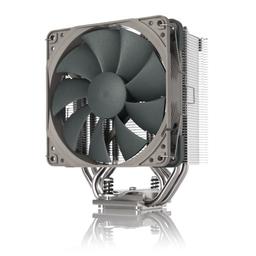
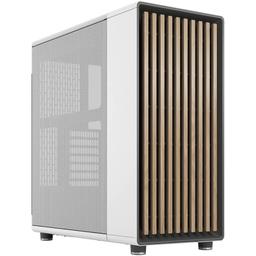
The Fractal Design North was chosen specifically for its quiet operation. When you're recording with microphones in the same room as your PC, fan noise is your enemy. The Noctua cooler and Fractal case together keep this system near-silent during typical production sessions. The discrete GPU handles display output and any video-related tasks without taxing the CPU.
Updated for mid-2026: Low-latency audio still favors fast cores and a quiet chassis over raw core count, so this build ages well. The 7700X — or the newer Ryzen 7 7700 and Zen 5 9700X — comfortably handles 100+ track sessions at small buffers, though the chart's last row is the one to plan around: a single deeply stacked channel strip runs out near 24 instances long before the parallel count does. The GPU is almost irrelevant for DAW work: the RTX 4060 here is fine, and any current budget card (RTX 5060, Intel Arc B580) works equally. Spend the real money on a quality audio interface and room treatment. DDR5 has risen sharply since this guide was written, so the 64GB jump for large Kontakt or orchestral libraries is now the most expensive single change you can make to this list.